
 +86-18958951029
 sales@wohuaplastic.com
PA6 vs PA66: How to Choose the Right Nylon Grade for Injection-Molded Parts
Why PA6 and PA66 Are Both Called Nylon
PA6 (nylon 6) and PA66 (nylon 66) are the two most widely used polyamide grades in injection molding. Both belong to the nylon
family, both offer good mechanical strength, wear resistance and chemical resistance, and both are produced in large volumes
around the world. Because their names are so similar, buyers sometimes treat them as interchangeable. In practice, the two grades
differ in molecular structure, which leads to real differences in heat performance, moisture behavior and dimensional stability.
Understanding those differences before requesting a quote can save time and reduce the risk of choosing a grade that works in
the short term but disappoints in service.
What Makes PA66 Different at the Molecular Level
Both PA6 and PA66 are built from repeating amide groups, but their monomers differ. PA6 is made from a single monomer, caprolactam.
PA66 is made from two monomers, hexamethylenediamine and adipic acid. This structural difference gives PA66 a more regular chain
arrangement, which allows its molecules to pack more tightly and form a higher degree of crystallinity. That higher crystallinity is the
main reason PA66 tends to show higher strength, stiffness and heat resistance than standard PA6 under comparable conditions.
Mechanical and Thermal Performance: PA6 vs PA66
In simple terms, PA66 generally offers higher mechanical strength, stiffness and heat deflection temperature than PA6. If a part must
carry load at elevated temperature, or must hold its shape under heat, PA66 is often the first option to evaluate. PA6 is usually tough
and easier to process; its lower melting point means a wider processing window and lower energy use in molding. PA6 is also often
preferred when surface quality and easier filling are priorities, while PA66 is favored when the application demands more from the material.
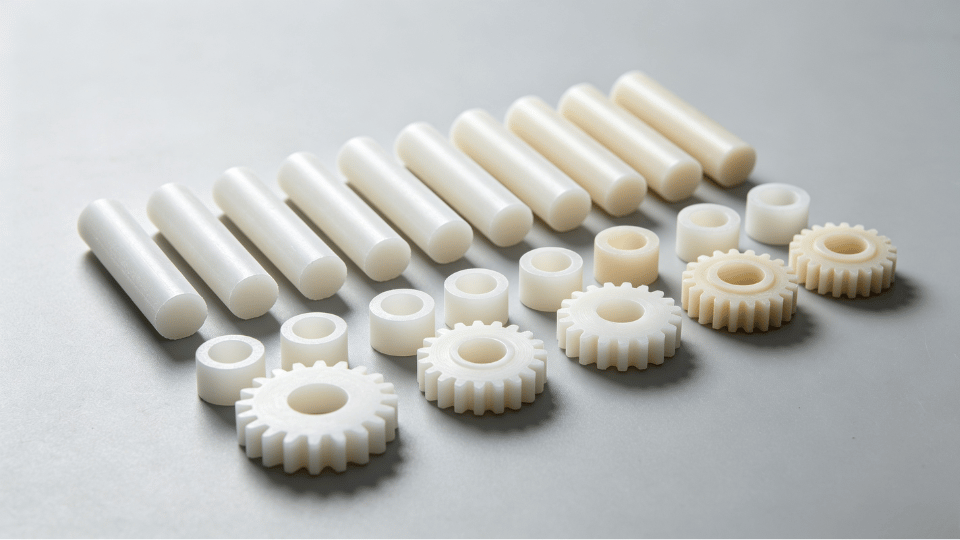
Quick comparison
Moisture Absorption: A Difference That Affects Real Parts
All nylon grades absorb moisture because of their amide groups, and absorbed water acts as a plasticizer. In PA6 the effect is usually
more noticeable: the material takes up more equilibrium moisture, which can lower stiffness and change dimensions more than PA66
under the same humidity. For precision parts with tight tolerances, this difference matters. Designers often allow for moisture-related
dimensional change, or specify a reinforced grade such as glass-fiber-reinforced nylon to reduce movement. Regardless of grade,
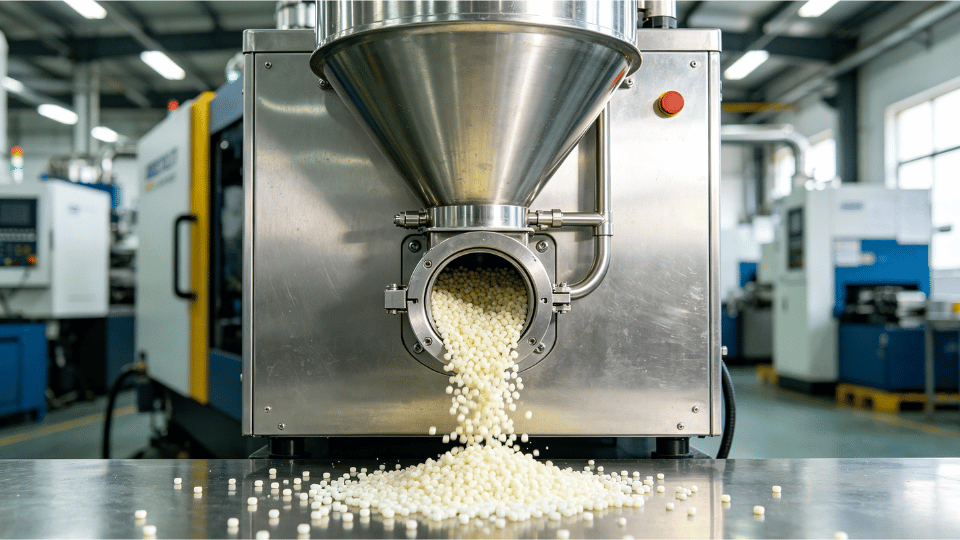
nylon pellets must be dried before molding; moisture in the pellets causes splay, bubbles and reduced mechanical properties.
Typical Applications: Where Each Grade Fits
PA6 is widely used for parts where toughness, good surface appearance and easier processing are important, such as housings, brackets,
cable ties, textile components and general industrial parts. PA66 is often chosen for more demanding engineering applications, including
automotive components under the hood, electrical connectors, gears, and parts exposed to higher heat or continuous load. Reinforced
versions, especially glass-fiber-reinforced PA6 and PA66, extend both grades into structural applications.
Cost, Supply and Consistency Considerations
Price and availability also play a role. PA6 is generally more economical and is produced in very large volume, which often makes it easier
to source with stable supply. PA66 has experienced more price fluctuation in recent years because of raw material supply, so buyers
who choose PA66 should confirm availability and lead time early. For both grades, consistency matters: the same grade name from
different suppliers can differ in additive systems, viscosity and lot stability, so datasheets and trial samples should be part of the evaluation.
How to Choose: A Short Checklist
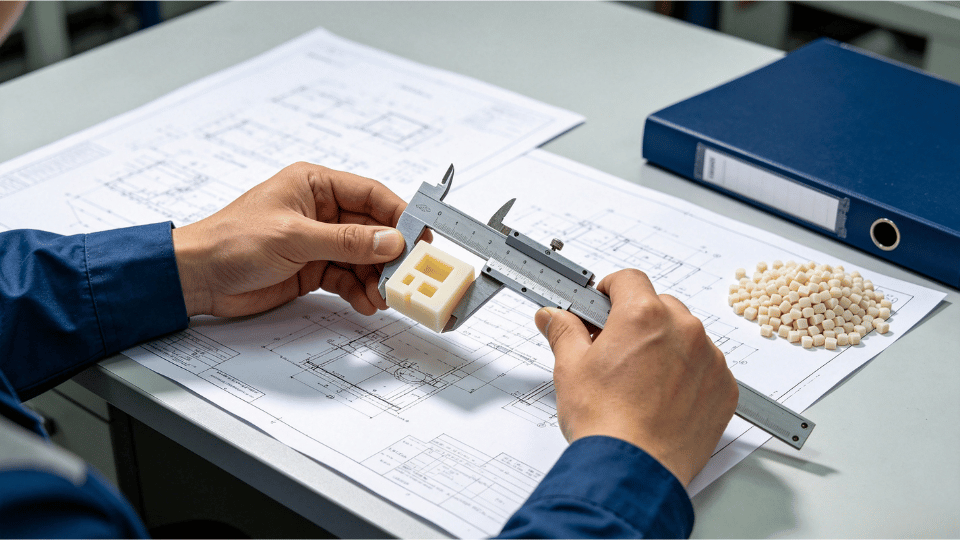
When you prepare an inquiry for a nylon part, these points help a supplier recommend PA6 or PA66 more accurately:
Working temperature, including continuous and peak values
Load type: static, dynamic, impact or continuous
Exposure to moisture, chemicals or outdoor conditions
Dimensional tolerance and assembly requirements
Surface and appearance requirements
Whether glass fiber or other reinforcement is needed
Target quantity and delivery schedule
With these details, a supplier can compare the two grades against your real conditions instead of guessing from a part name.
How Wohua Plastic Can Help
Wenzhou Wohua Plastic Co., Ltd. supplies PA6, PA66 and related engineering and modified grades, including glass-fiber-reinforced and flame-retardant versions, and supports custom plastic parts based on drawings or samples. If you are deciding between PA6 and PA66, send us the part application, working environment, drawing or sample and target quantity. We will help review the material direction and arrange samples for trial.