
 +86-18958951029
How to Read a Plastic Datasheet (TDS): A Buyer's Guide to Key Values
Why Reading a Datasheet Correctly Matters
When buyers compare PA6, PA66, POM, PC, PC/ABS, PBT or modified grades, the datasheet is the first practical document both
sides should review. A material name alone does not tell you whether a grade will survive the working temperature, the load, the
chemical contact or the required assembly tolerance.
A technical datasheet, usually called TDS, gives the manufacturer's typical values for a specific grade. These values are useful
for screening candidates, but they should be compared under the same test method and same test conditions. Otherwise, two
datasheets can look different even when the materials perform the same.
At Wenzhou Wohua Plastic Co., Ltd., we help buyers review TDS values before recommending a grade. This guide explains the
values buyers should check first and how to compare them without over-reading the numbers.
What a TDS Really Contains
A plastic datasheet usually lists physical, mechanical, thermal, electrical and flammability properties. Common sections include
density, moisture absorption, tensile strength, elongation at break, flexural modulus, impact strength, melting point, heat deflection
temperature (HDT), volume resistivity, dielectric strength, comparative tracking index (CTI) and UL94 flame class.
Some sheets also show processing conditions such as drying temperature, melt temperature and mold temperature. Processing
information is useful, but it does not replace the product performance values.
The most important habit is to read the test standard first. For example, impact strength may be measured as Izod or Charpy,
notched or unnotched, at 23°C or at low temperature. The same polymer family can appear very different depending on which
test was used.
Mechanical Values: Strength Is Not the Only Number
Tensile strength is often the first value buyers see. It shows the stress a material can withstand while being pulled before yielding
or breaking. It helps compare general stiffness and load capability, but it does not show how the part behaves after impact, under
bending or over a long service life.
Elongation at break is useful because it indicates how much a material can stretch before failure. A brittle-looking material may still
be selected for a rigid housing, while a flexible part may need a grade with higher elongation.
Flexural modulus is the value to check when a part must resist bending without deflecting too much. It is often relevant for brackets,
enclosures, covers and structural components.
Impact strength is one of the values buyers over-rely on and also under-read. A high notched impact value can be helpful for a
snap-fit or a part exposed to drops, but the test specimen, notch type and temperature must be compared carefully.
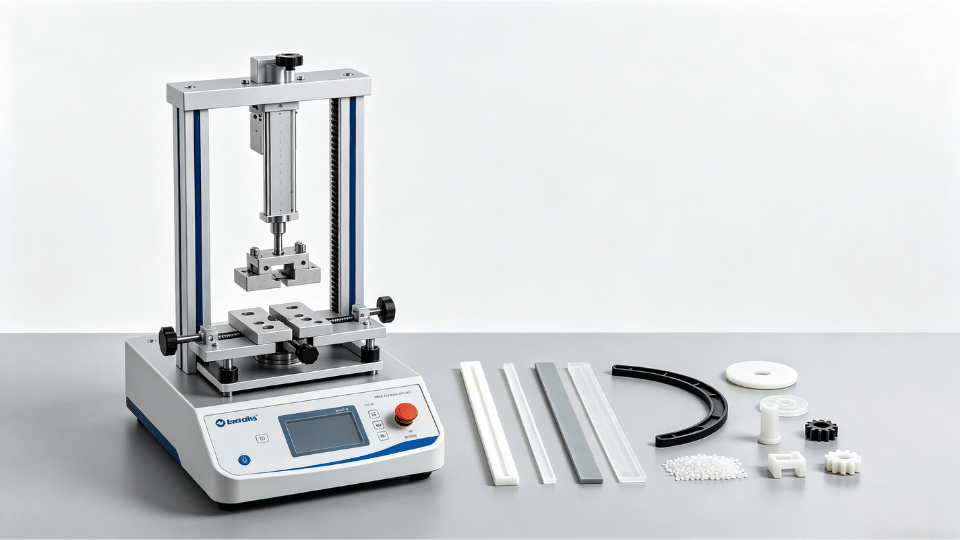
For a custom plastic part, the drawing, wall thickness, ribs, assembly forces and operating environment should be reviewed together
with these mechanical values. A single strength number cannot decide whether a grade is suitable.
Thermal Values: HDT Is a Screening Value, Not a Service Limit
Melting point is the basic thermal reference for a crystalline material such as PA, POM or PBT. Amorphous materials such as PC, ABS
and PC/ABS do not have a clear melting point; they soften over a temperature range.
Heat deflection temperature (HDT) is one of the most quoted thermal values. HDT is measured by loading a test bar to a specified stress,
usually 0.45 MPa or 1.82 MPa, and raising the temperature until the bar deflects by a set amount. This means HDT is not the same as
continuous service temperature. A material with a higher HDT at 1.82 MPa is generally a better candidate for a part under load at elevated
temperature, but real service conditions still need review.
Vicat softening temperature and continuous use temperature may appear on datasheets. Continuous use temperature depends on the
polymer, the additive package and the property loss a part can tolerate over time. When a buyer says the part will work at 120°C, the
supplier should ask whether that temperature is continuous, short-term or only during a peak condition.
Physical and Moisture Values: Small Numbers Can Change a Lot
Density is a simple value that affects part weight and material cost. Moisture absorption is less obvious but very important for many
engineering plastics.
PA6 and PA66 absorb more moisture than POM, PBT and PC. Moisture can change dimensions, impact performance and electrical
properties. A part molded from a moisture-sensitive grade may perform differently after it absorbs moisture in a humid environment.
When comparing PA with a lower-moisture material such as POM or PBT, the buyer should look at the part's operating humidity,
dimensional tolerance and expected service life. The datasheet moisture value helps start that conversation.
Electrical Values for Connectors and Electronic Housings
Electrical insulation is often specified with volume resistivity, dielectric strength and comparative tracking index (CTI). CTI is especially
important for connectors, relays, switches and other parts where surface tracking may occur under pollution and moisture.
A higher CTI value generally means better resistance to tracking. For safety-related electrical applications, the buyer should check the
required CTI class, the wall thickness and the relevant standard for the final product.
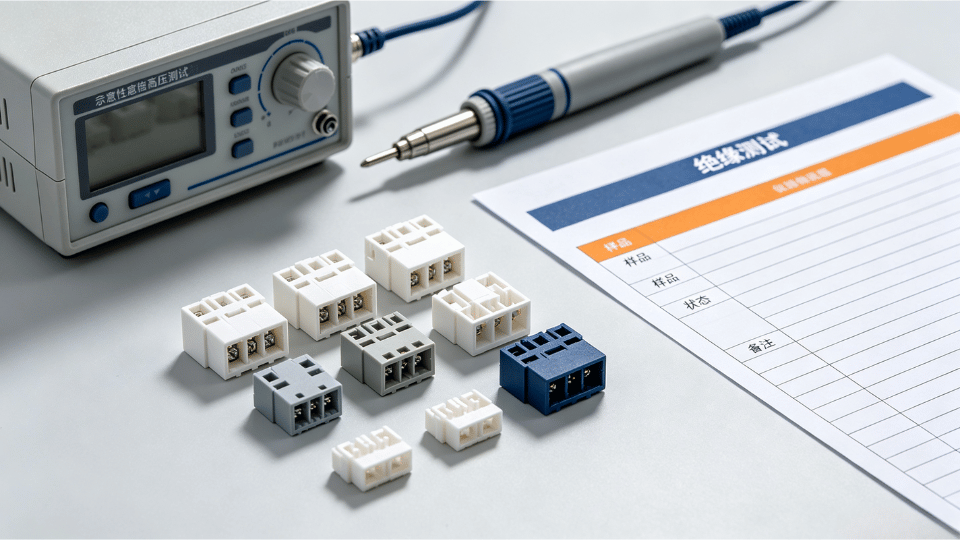
Electrical values are condition-dependent. They can change with temperature, humidity, test frequency and specimen thickness. A
datasheet value is a starting point, not a guarantee that a housing will pass the finished-product test.
Flame Ratings, Chemical Resistance and Weathering
UL94 is a common flammability classification. Classes such as V-0, V-1 and V-2 are based on vertical burning tests with specific specimen
thicknesses. The class shown on a datasheet applies to the tested thickness; a thinner or thicker part may have a different result.
Chemical resistance is usually shown as a general guide rather than a single number. A material may resist oils well but not strong solvents,
or it may perform differently under stress and elevated temperature. If a part will contact fuels, cleaners or industrial fluids, the buyer should
describe the chemical, concentration, temperature and duration.
UV and weathering resistance should also be checked for outdoor parts. Standard unmodified grades may yellow or lose mechanical
properties over time. UV-stabilized or weather-resistant versions are available for many products, but the datasheet should be checked
for the actual additive package.
A Practical Checklist Before You Compare Datasheets
Before choosing between two plastic grades, prepare a short checklist:
Confirm the test method and specimen thickness for every value you compare.
Separate peak temperature from continuous service temperature.
Identify whether the part will be under load, exposed to chemicals or exposed to moisture.
Check the impact test type: Izod or Charpy, notched or unnotched.
Confirm the UL94 class and the tested thickness.
Ask whether the supplier can provide samples and a consistent lot-to-lot supply.
Review the part drawing together with the datasheet rather than reading values in isolation.
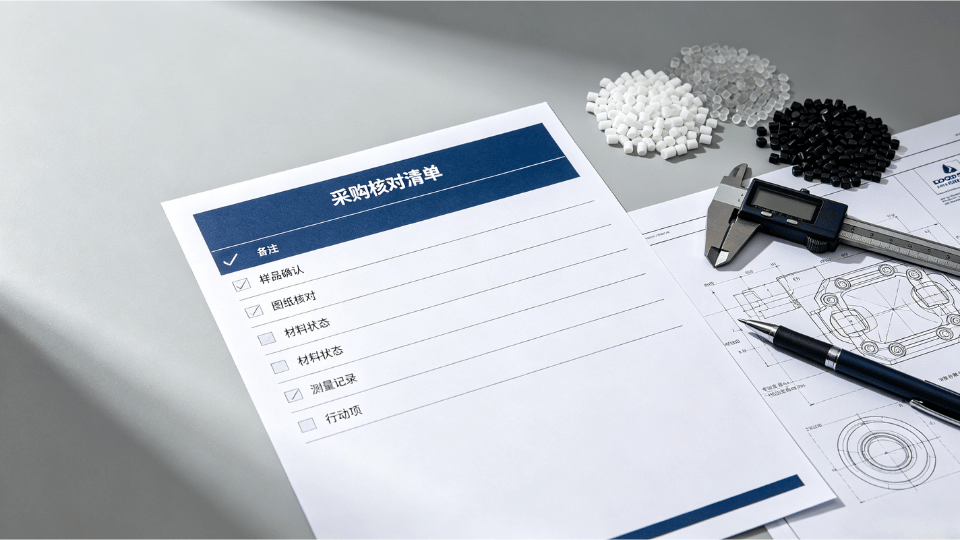
Wenzhou Wohua Plastic Co., Ltd. supports engineering plastics, modified plastics and custom plastic part development. If you are comparing datasheets for an application, send us the drawing, working conditions and target quantity. Our team can help you review which grade deserves a sample test.