 +86-18958951029
 sales@wohuaplastic.com
Modified Plastics: Driving Innovation & Sustainability
Modified Plastics — Key Materials Driving Innovation and Sustainability
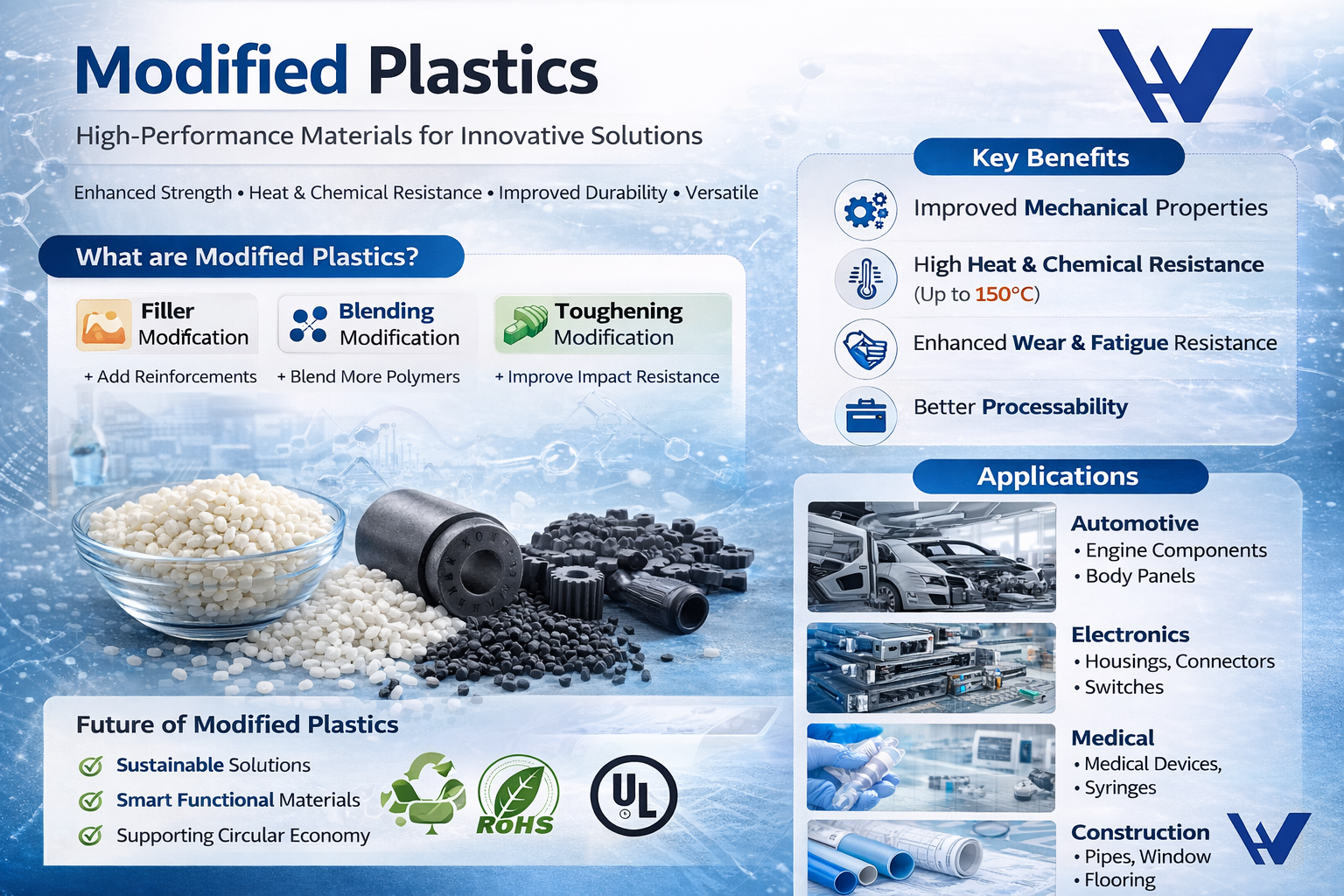
Modified plastics, a high-performance engineering material, significantly enhance the properties of base plastics by introducing additives and undergoing physical or chemical modification. These enhancements improve mechanical properties, heat stability, chemical resistance, and more, making modified plastics widely applicable in industries such as automotive, electronics, construction, and more. As technology advances, the range of applications for modified plastics continues to expand, positioning them as essential materials for industry innovation and upgrading.
🌐 What are Modified Plastics?
Modified plastics are created by improving the structure of base plastics or adding other materials to alter their properties. Common modification methods include filler modification, blending modification, toughening modification, and reinforcing modification.
By modifying plastics, their mechanical properties, heat resistance, chemical resistance, and wear resistance can be significantly improved, enabling them to meet the needs of more complex applications.
🌍 Advantages and Characteristics of Modified Plastics
1. Improved Mechanical Properties
Modified plastics can be reinforced with materials like glass fibers and carbon fibers, significantly increasing their strength, rigidity, and impact resistance. This makes them ideal for high-load and high-stress applications in industries like automotive and aerospace.
2. High Heat and Chemical Resistance
Modified plastics often withstand higher temperatures, maintaining stable performance even at temperatures over 200°C. They also offer strong resistance to a wide range of chemicals, oils, and solvents, making them ideal for industries such as chemicals and electronics.
3. Enhanced Wear and Aging Resistance
With modification, plastics can gain superior wear resistance, reducing damage caused by friction and wear in mechanical parts. Modified plastics also show increased resistance to UV radiation and aging, allowing them to perform better in outdoor environments.
4. Improved Processability
Some modified plastics have significantly better processability, making them suitable for more complex molding processes like injection molding and extrusion. This not only increases production efficiency but also reduces manufacturing costs.
🌍 Applications of Modified Plastics
Modified plastics are widely used across various industries, with some common application fields listed below:
1. Automotive Industry
In the automotive sector, modified plastics are used for manufacturing parts such as body panels, engine components, and dashboard systems. Thanks to their strength and heat resistance, modified plastics play an important role in reducing vehicle weight, improving fuel efficiency, and enhancing safety.
2. Electronics Industry
Modified plastics are widely used in electronic devices such as mobile phones, televisions, and computer housings. Their excellent electrical insulation properties and UV resistance make them ideal for both external casings and internal components of electronic products.
3. Construction Industry
In construction, modified plastics are used for pipes, window frames, flooring, and other applications. Their resistance to corrosion, weathering, and ease of processing contribute to longer service life and durability in building structures.
4. Medical Industry
Modified plastics are also extensively used in the medical industry, particularly for medical devices and packaging materials. Their biocompatibility, antibacterial properties, and durability make them a vital material for medical equipment.
💡 Future Development of Modified Plastics
As demand for high-performance materials continues to rise, the technology behind modified plastics will keep evolving. In the future, modified plastics will develop in the direction of more environmentally friendly, sustainable solutions, helping to achieve a circular economy and sustainability. Additionally, with the emergence of functional and smart materials, modified plastics will open up new opportunities in innovative fields.
🌱 Conclusion
Modified plastics, with their excellent mechanical properties, high heat resistance, chemical resistance, and processability, are becoming key materials driving growth across various industries. From automotive to electronics, medical to construction, modified plastics offer more possibilities for product design and manufacturing, helping businesses improve performance, reduce costs, and meet the increasingly complex needs of the market.